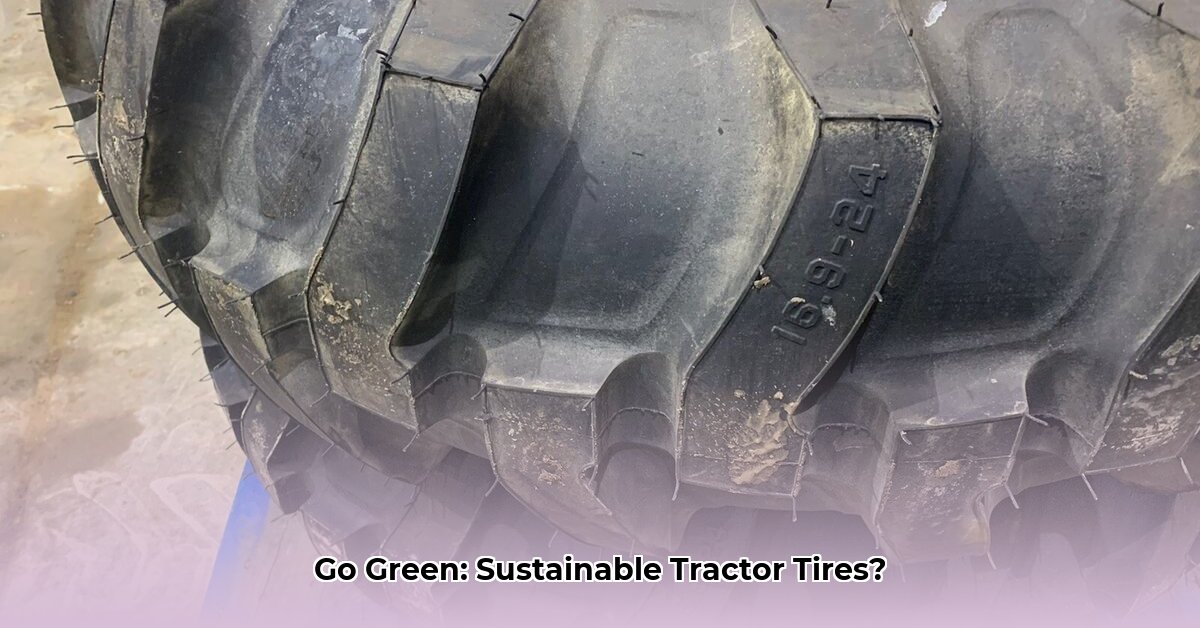
Choosing the right tractor tires is a critical decision impacting fuel efficiency, soil health, and environmental sustainability. This guide focuses on the popular 16.9 x 24 tire size, offering actionable advice for farmers to make informed, eco-conscious choices. We'll explore sustainable options, maintenance best practices, and future innovations in tire technology. For more tire size information, see this helpful resource.
Understanding 16.9 x 24 Tractor Tires: Workhorses of the Farm
The 16.9 x 24 tire is a versatile choice for various tractors, handling tasks from plowing to hauling. Its suitability depends on factors like load capacity (check manufacturer specifications!) and tread patterns, which are designed for different soil types. Selecting a tire with the appropriate tread pattern is crucial for optimal traction and minimizing soil compaction. But isn't maximizing tire life equally important for both your budget and the environment?
Sustainability Considerations: Beyond the Rubber
Tractor tires, while essential, have a significant environmental impact across their lifecycle. Rubber production is resource-intensive, and tire disposal often ends in landfills. Manufacturing processes generate emissions, and tire wear releases microplastics into the environment. While significant strides are being made in sustainable tire production, a critical data gap exists in the comprehensive life cycle assessment (LCA) of different tire types and materials. This lack of transparency hinders informed decision-making. How can we bridge this gap and promote more responsible manufacturing?
Choosing Sustainable 16.9 x 24 Tractor Tires: Prioritizing Environmental Impact
Selecting sustainable tires involves carefully evaluating several factors:
Tire Construction: Look for tires incorporating recycled rubber and other reclaimed materials. This reduces demand for raw materials and minimizes the environmental footprint of their production. Many manufacturers are making significant progress in this domain.
Tread Life: Longer-lasting tires translate to fewer replacements, reduced waste, and cost savings over time. Proper inflation and regular maintenance are vital for extending tire lifespan. Isn't it remarkable how simple actions can have such profound impacts?
Brands and Sustainability: Research brands committed to sustainable manufacturing practices and transparent supply chains. Investigate their use of recycled or bio-based materials and their commitment to responsible disposal options. Seeking out this information is crucial in making informed purchases.
Optimizing Tire Life and Performance: Simple Maintenance, Substantial Gains
Maximizing tire lifespan and performance involves these actionable steps:
Proper Inflation: Maintain tire pressure according to manufacturer recommendations. Underinflation increases fuel consumption and wear, while overinflation can damage the tire structure and contribute to soil compaction. Regular pressure checks are essential.
Regular Inspections: Conduct routine inspections for cuts, bulges, or embedded objects. Addressing small issues promptly prevents major problems and extends tire life.
Tire Rotation: Rotate your tires according to the manufacturer's guidelines to ensure even wear and maximize lifespan.
Appropriate Storage: Store tires properly when not in use—protection from sun, moisture, and potential damage is vital.
Future Trends & Innovations: Sustainable Tire Technology
The future of sustainable tractor tires is promising, with ongoing research into:
Bio-based Materials: The development of bio-based materials offers a potential pathway to lessen reliance on petroleum-based rubber. Research in this area is progressing, promising less environmentally impactful alternatives.
Enhanced Recycling: Improved recycling processes are being developed, rendering tire recycling more effective and cost-efficient while reducing landfill waste.
Smart Tire Technology: Future technologies might incorporate sensors monitoring tire pressure, temperature, and other crucial metrics. Predictive maintenance helps prevent blowouts, maximizes uptime, and optimizes fuel efficiency.
Choosing sustainable 16.9 x 24 tractor tires is not just an environmental responsibility; it's economically prudent. While some eco-friendly options may have higher upfront costs, the long-term benefits—fuel savings, reduced tire replacements, and a smaller environmental footprint—make them a worthwhile investment for both your farm's profitability and the planet's sustainability.